Third-Party Risk Management Framework: Securing Your Supply Chain

A compromised credential held by a minor vendor can disable your entire enterprise network in minutes. Enterprise leaders must realize that their internal defenses are only as strong as their weakest external partner.Many technology leaders wonder how to shift vendor security from a simple IT task to a core business goal. Securing your supply chain needs deep commitment and resources that only executive directors can provide. We start by examining Why Third-Party Risk Management Demands a Board-Level Strategy.
A third-party risk management framework is a structured governance program that helps organizations find, assess, and control cybersecurity risks from external business partners. According to the National Institute of Standards and Technology, managing supply chain risk requires a highly systematic process. This approach shields your business networks from malicious code, poor development practices, and dangerous security leaks across your entire supply chain. By establishing continuous monitoring, clear vendor contracts, and deep technical audits, this program helps you maintain visibility over all external partners. Ultimately, these structured safeguards ensure that a minor security gap at an outside vendor does not disrupt your internal systems. By using this framework, your business can protect its assets and easily satisfy strict regulatory compliance rules.
Why Third-Party Risk Management Demands a Board-Level Strategy
Board leaders must view partner safety as a core business risk. Today, most businesses use many web tools and cloud systems. Each vendor creates a new path into your private network. Board members can no longer treat partner safety as a simple IT issue. It is a major governance duty that needs a clear third-party risk management framework.
Without proper oversight, a company is open to major breaches and data leaks. Regulators now hold board members responsible for cyber attacks that start through a partner. For this reason, leaders must guide vendor checks from the very top of the company. A strong security program helps protect your brand, your clients, and your bottom line.
The growth of partner security risks
Large groups now face a vast network of suppliers. This complex web creates deep business dangers. According to the World Economic Forum, 54% of large businesses say supply chain weak spots are their greatest barrier to cyber strength. This threat ranks higher than budget limits, staffing gaps, or technical tasks.
When a business shares data with outside partners, its attack surface expands. Hackers often target small partners who have weak safety systems. These attackers then use the vendor's access to reach the larger company's network. This trend means that your overall security is only as strong as your weakest partner.
Unseen threats in vendor software
Many risks come from a lack of sight into how partners build their tools. Most businesses do not know how their vendors test and setup software. The National Institute of Standards and Technology outlines these issues in its NIST SP 1305 guide. These threats include malicious code, fake devices, and flaws from poor building practices.
To reduce this risk, you must check all software before you use it. This means looking at how vendors write code and secure their systems. Security teams can use a clear third-party risk management framework to guide this work. Vetting your vendors helps ensure that new tools do not bring dangerous flaws into your network. It protects your business and lowers the chance of a costly supply chain risk event.
Why leaders must take control
To block these risks, boards must take direct charge of partner safety. Leaders should set clear rules for vetting new vendors and checking existing ones. They must also write strict safety rules into every vendor contract. When leaders guide this work, the company can align its risk plans with business goals.
Active oversight also helps businesses stay compliant with industry rules. Many laws now require companies to monitor their supply chains closely. Leaders must be able to prove that they are tracking vendor security. A proactive approach protects your brand from major harm while keeping client data safe.
Third-party risk management is now a board-level priority. Interconnected systems and supply chain weak points create massive business risks. By setting up a clear framework and taking a proactive stance on vendor security, executive leaders can protect corporate assets and maintain compliance.
What Is a Third-Party Risk Management Framework?
The core definition
A third-party risk management framework is a structured way to find, track, and reduce risks from outside vendors. These outside partners include software vendors, cloud hosts, and parts suppliers. The National Institute of Standards and Technology (NIST) calls this supply chain risk management. It is a systematic way to manage threat exposure across all your vendors.
Without this blueprint, security teams struggle to track the tools they buy. A major source of risk is a lack of visibility into how vendor tools are built and run. A clear framework helps you see these threats before they enter your network.
A solid plan checks a vendor at every stage of your work together. It starts during the initial sales process before you sign any contract. It guides how you monitor the vendor while they serve you. Finally, it tells you how to safely remove their access when the contract ends.
The weakness of ad hoc methods
Many teams try to track their vendor risks by hand. They often use simple spreadsheets and send yearly surveys to their partners. This ad hoc way of working is slow and leaves large security gaps. It cannot keep pace with new threats or changes in a vendor's network.
In contrast, a structured program treats vendor risk as a continuous cycle. It sets clear rules that every partner must meet before they can connect to your systems. This is vital in sectors with complex supply chains, where third-party vendor security is a key part of staying safe.
If a vendor has a weak password policy, a hacker can easily steal their keys. The hacker can then use those stolen keys to move into your database. If you only check your vendors once a year, you will miss these weak spots. A formal framework prevents this by requiring constant security checks.
Standardized governance models
You do not have to build your plan from scratch. Most modern plans use benchmarks from proven models. For example, you can find detailed guidelines on how to manage these risks in NIST SP 800-161. These public files show how to blend supply chain risk into your daily business choices.
They help you draft clear rules to place in your vendor contracts. A strong contract ensures your partners keep your data safe. This shields your network and makes it much easier to pass compliance audits.
These standard frameworks also give you a common language to use with your business partners. They help you compare risks across different vendors on an equal scale. This makes it easier to show your board of directors how you are keeping the company safe.
A third-party risk management framework is a structured process to find, assess, and reduce vendor threats. It replaces weak, manual checks with consistent, continuous controls that protect your entire supply chain.
The NIST Framework Suite for Third-Party Risk: 800-53, 800-161, and CSF 2.0
The National Institute of Standards and Technology (NIST) provides three main tools to build a strong third-party risk management framework. For modern companies, cybersecurity supply chain risk management is a clear process to manage risk across vendors, as defined in NIST Special Publication 1305. These standards help security teams find, assess, and control threats from vendor networks. Each tool serves a unique goal depending on your security needs.
NIST Special Publication 800-53
NIST SP 800-53 is a large library of security and privacy controls. It is designed to secure federal systems, but many private companies use it too. This catalog offers deep rules for areas like access control, incident response, and risk assessment. It is best for companies that need a highly detailed list of technical rules to secure their supply chain.
NIST Special Publication 800-161
This publication is the most specific standard for supply chain risk. Under NIST SP 800-161 r1, companies must find, assess, and reduce risks at all levels. This approach connects vendor risk to daily business operations, covering issues like bad code and poor security practices. Using this standard helps your team build a clear plan to check vendors throughout their lifecycle.
NIST Cybersecurity Framework 2.0
The NIST Cybersecurity Framework (CSF 2.0) is a flexible tool for all industries. It focuses on six core functions: govern, identify, protect, detect, respond, and recover. CSF 2.0 bridges the gap between technical teams and business leaders to make risk easy to discuss. Running a professional security risk assessment is a great first step to align your team with this standard.
A strong program requires continuous oversight. A robust third-party risk management framework needs continuous monitoring of vendor security postures to prevent active threat actors from finding weak points. The table below outlines how these three options compare so you can choose the best path.
| Framework | Focus Area | Best For | Key Features |
|---|---|---|---|
| NIST SP 800-53 | Technical security and privacy controls | Federal systems and highly regulated companies | Over 1,000 security controls in 20 families |
| NIST SP 800-161 r1 | Cyber supply chain risk management | Companies with complex global supply chains | Multi-level approach with risk plans and guidelines |
| NIST CSF 2.0 | Governance, resilience, and business alignment | All companies needing flexible security rules | Six core functions focused on business outcomes |
Most companies do not choose just one standard. Instead, security teams blend these tools to build a custom third-party risk management framework. For instance, use CSF 2.0 for high-level strategy and SP 800-161 for supply chain policies, then use SP 800-53 to choose specific vendor checks. Working with a dedicated cybersecurity partner helps you mix these frameworks without adding complex work for your internal teams.
To build a strong third-party risk management framework, companies should use the NIST suite. This approach balances high-level governance, supply chain controls, and technical security baselines across vendor networks.
How to Build a Third-Party Risk Management Program in 5 Phases
Many modern IT leaders face big gaps in supply chain visibility. In fact, third-party risks often stem from decreased visibility into how acquired technology is developed and deployed. Without clear sight, your team cannot spot hidden flaws in external software or hardware. Using a structured third-party risk management framework helps your team find and close these gaps. This proactive approach ensures you maintain full control over your digital borders.
The challenge of limited supply chain sight
Building an expert risk program does not have to be complex. A clear, five-step path allows you to find, check, and monitor your vendors with ease. This plan helps your internal team run a secure and compliant supply chain. It also ensures you meet your strict compliance goals without adding heavy burdens to your staff.
- Identify and Inventory Vendors: You must first build a complete list of every external partner, supplier, and tool your team uses. Knowing who has access to your network is the vital starting point for supply chain safety.
- Assess and Tier Vendors by Risk: Group your vendors by how much risk they bring to your business. This step requires a thorough security risk assessment. It helps you group partners into low, medium, and high risk tiers.
- Establish Contractual Security Requirements: Put clear rules in writing before you work with any new partner. This follows guidance from NIST SP 800-161 to set clear cybersecurity requirements in your vendor contracts. Clear agreements protect your data and your users.
- Implement Continuous Monitoring: Do not just check your vendors once a year. Run continuous monitoring to verify that external partners keep their security standards high throughout the relationship lifecycle. Constant vigilance stops breaches early.
- Review and Refresh Methodology: Regularly update your risk plans as threats and technologies change over time. According to a Deloitte survey, 63% of organizations say their main focus is to refresh and update their overall risk methodology. Staying current keeps your defenses strong.
Strengthening your internal team
Many mid-market teams struggle to manage this five-step process on their own. Limited staff and tool sprawl often get in the way of steady vendor checks. Working with a dedicated partner can give you the 24/7/365 US-based expert support you need to handle vendor risk. This allows your team to focus on daily business goals while keeping your entire supply chain secure.
The value of ongoing vendor review
Threat actors always seek weak spots in third-party software to breach larger networks. For this reason, checking a vendor once is never enough to keep your business safe. Your team must track, check, and adjust security rules as new threats emerge. By building a strong risk process, you can stop supply chain attacks before they disrupt your work.
Summary: Building a third-party risk management framework requires listing vendors, running assessments, and setting strict contract terms. You must also monitor partners daily and update your plans as threats change.
Aligning Your TPRM Framework with Compliance Standards
Security rules do not stop at your office walls. Today, compliance demands that you protect your whole supply chain. A solid compliance framework must cover every vendor that has access to your systems or data. Working with outside partners can expose your network to new threats. When you map vendor checks to top standards, you build trust and keep data safe.
Mapping standards to vendor controls
Most main standards ask for strong vendor risk plans. For example, ISO/IEC 27001:2022 sets clear rules for how groups manage supply chain risk. BCS365 holds this key ISO certification, so we know the rigor needed to secure vendor touchpoints. Our team uses a secure third-party risk management framework to make sure all partner controls meet these strict rules. This ensures that every system remains compliant.
Other frameworks share these same goals. SOC 2 reports look at how vendors protect your client data. For health fields, the HITRUST CSF acts as a threat-adaptive control library that combines more than 60 security frameworks into one. Using one system to manage these rules keeps you from doing the same work twice. It also gives you a clear view of your risk posture.
Vendor rules in regulated fields
Some fields face much higher risks than others. In Life Sciences, teams must prove that their suppliers do not risk patient safety or data rules. Banks and insurance groups face strict laws on vendor oversight to stop fraud. Manufacturing plants must watch their supply chains to prevent line stops. For these fields, vendor risk checks are not a choice; they are required by law.
How a framework simplifies audit goals
An audit can be long and painful. But a clear framework makes it easy to prove you meet all rules. Instead of scrambling for proof, you keep all vendor risk files in one clean place. This proactive setup streamlines audit work. It lets your team focus on growth rather than paper drills. Auditors like clean, organized dashboards.
Our U.S.-based team works as a force multiplier for your IT staff. We help you set up and run these checks with full transparency. With 24/7/365 support, we ensure your vendor ecosystem stays secure day and night. We handle the heavy lifting of compliance mapping so you can run your business safely.
A third-party risk management framework aligns vendor controls with standards like ISO 27001, SOC 2, and HITRUST CSF. In regulated fields like Life Sciences and Finance, this structured approach simplifies compliance audits and secures sensitive data.
How Managed Detection and Response Extends to Vendor Ecosystems
A strong third-party risk management framework needs more than static checklists. Many groups rely on paper forms to check vendor safety. But these forms only show a single point in time.
If a vendor gets hacked the next day, your paper check will not help. Security threats move fast. To protect your business, you must see what happens in vendor systems in real time. Static plans leave blind spots in your defense.
The need for continuous monitoring
Static tools do not stop modern supply chain attacks. When you share data with a partner, their risk becomes your risk. This is why ongoing checks are key to a safe supply chain. According to NIST, continuous monitoring is essential to ensure that third-party vendors maintain their security standards throughout the lifecycle of the relationship.
Without real-time data, your risk plan is just a guess. You cannot know if a vendor disables their firewall or drops their security guard. Active threat tracking solves this issue. It lets you watch vendor connections and spot signs of a breach before threat actors can reach your core systems.
Active defense with a modern soc
To secure your vendor network, you need active support. This is where Managed Detection and Response (MDR) comes in to bridge the gap. BCS365 offers a 24/7/365 Security Operations Center (SOC) that is 100% based in the United States with zero outsourcing. Our team acts as a force multiplier for your internal IT staff.
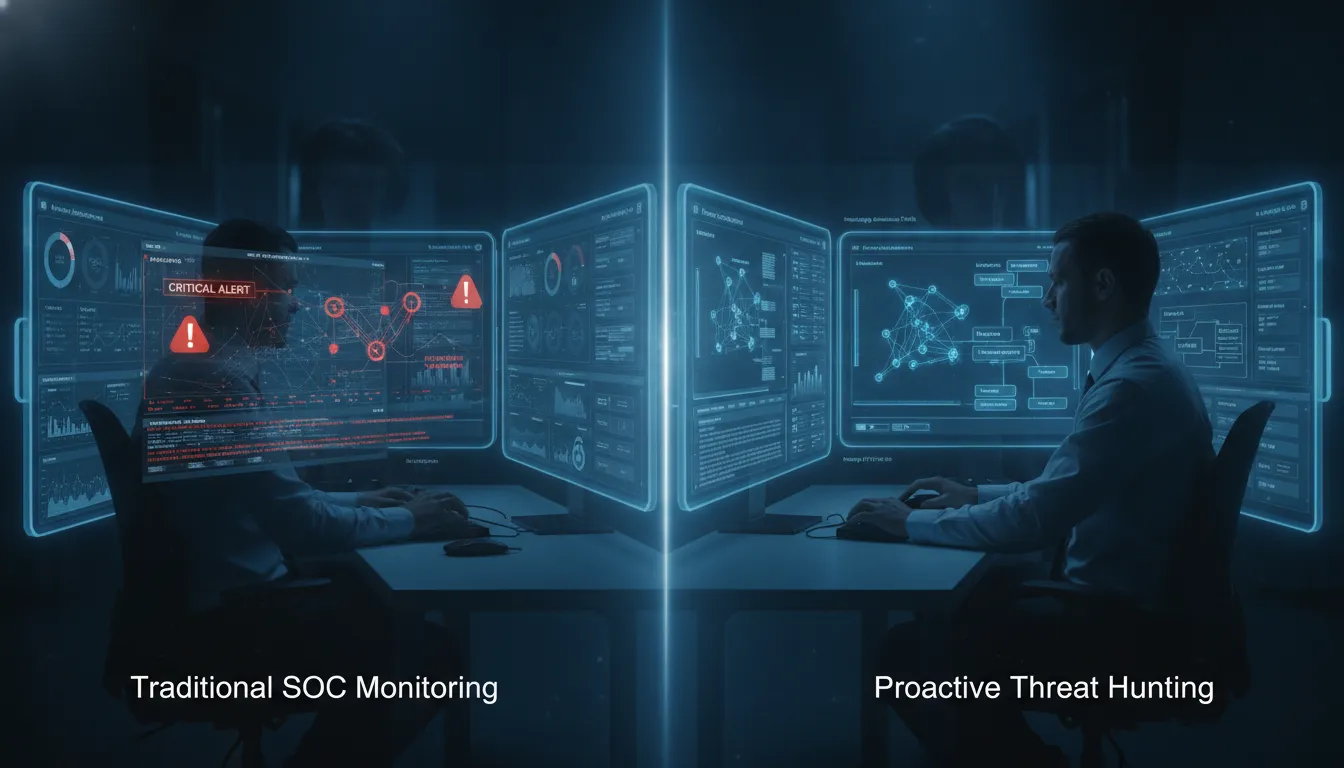
We use offensive security methods to find weak points in your vendor defense. Thinking like threat actors, we run real-world threat simulation tests and hunt for risks across your entire attack surface. This proactive stance stops threats before they turn into major breaches. Your team gets clear visibility and fast response times.
Rigorous standards and proven trust
A security partner must prove their own safety before you trust them with your supply chain. BCS365 holds the ISO/IEC 27001:2022 certification. This global standard shows that we follow the best security practices in the world. We apply these same strict rules when we monitor your third-party systems.
When you combine our certified methods with active threat hunting, you get a full defense shield. We help you meet complex audit rules and reduce vendor risk. This lets your internal team focus on core projects while we handle the daily threat stream. You get peace of mind knowing your entire business network is safe around the clock.
By extending Managed Detection and Response (MDR) to your vendor ecosystem, you turn static check-sheets into active protection. BCS365 offers 24/7/365 US-based monitoring and offensive security methods to secure your supply chain and keep your third-party risk management framework strong.
Frequently Asked Questions
How do you assess third-party vendor security?
We assess third-party vendor security by performing detailed due diligence before onboarding. This step acts as the foundation of finding risks before they enter your supply chain. According to the NIST guidelines, you must review the security controls and policies of each vendor. Doing this helps you find hidden vulnerabilities and check if the vendor meets your safety standards. This proactive check keeps your network safe and prevents weak links from harming your business.
What security terms should be included in vendor contracts?
Your vendor contracts must include clear security rules. According to NIST guidelines, you should set clear requirements for both cybersecurity and supply chain safety. Make sure the vendor agrees to report any data leaks quickly. You should also write down their duty to fix bugs in a set time. These terms help protect your data and make sure the vendor takes safety seriously. Adding these terms keeps both sides aligned and reduces your risk.
Why is continuous monitoring essential for supply chain security?
Continuous monitoring is key because a vendor security setup can change at any time. Sourced NIST guidelines state that continuous monitoring is essential to ensure that third-party vendors maintain their security standards over time. If a vendor gets a new bug or has a leak, you need to know right away. Real-time checks help you spot these issues fast and stop threats before they spread into your main systems.
Ready to Secure Your Entire Third-Party Vendor Network?
Delaying your vendor security checks leaves your critical systems highly vulnerable to hidden supply chain threats that can quickly disrupt operations and damage brand trust. Starting a thorough vendor review today allows you to find and fix critical security gaps before hostile threat actors can exploit your trusted business partners. Establishing strong cybersecurity defenses now helps your business meet strict compliance standards and protects your sensitive client data from unauthorized access and expensive data breaches.
Ready to secure your supply chain? You can schedule a Security Risk Assessment with our expert team today to identify vulnerabilities and protect your company. Our certified, US-based cybersecurity professionals are standing by to assist your organization.