

Effective cybersecurity for manufacturing must protect far more than data. It must preserve safe, reliable production across connected business systems, industrial control systems, engineering workstations, remote vendor connections, and legacy equipment. For CIOs and CISOs, the central challenge is to unite IT and operational technology security without applying controls that create unacceptable production or safety risk.
Why cybersecurity for manufacturing must unite IT and OT
A unified IT and OT security program aligns cyber risk decisions with production safety, uptime, and business priorities. It gives leaders one view of connected assets, dependencies, access paths, and incidents while preserving the specialized operating practices required for industrial systems that cannot be managed like ordinary endpoints.
Manufacturers have connected plant systems to enterprise networks to improve visibility, quality, maintenance, and throughput. That connectivity creates value, but it also creates pathways between environments that historically had different owners, technologies, and risk tolerances. An identity compromise in the corporate environment can become an operational issue if access controls, remote connections, or network boundaries are weak.
IT and OT teams also define acceptable change differently. IT teams routinely patch, restart, and replace systems. OT teams may operate equipment for decades and require carefully planned maintenance windows, vendor validation, and safety review before making changes. A technically sound security measure can still be operationally unsafe if it is deployed without understanding the process it affects.
A joint governance model resolves that conflict. It makes the CIO, CISO, plant leadership, engineering, and safety teams accountable for shared outcomes rather than isolated controls. The program should establish:
- Common risk criteria that account for confidentiality, integrity, availability, safety, quality, and production impact.
- Clear ownership for every connected asset, security control, exception, and remediation decision.
- Approved maintenance and emergency-change processes for industrial systems.
- Joint incident response procedures that include safe shutdown and recovery requirements.
The objective is not to make OT behave like IT. It is to create coordinated decisions based on the operational context of each system. The NIST Guide to Operational Technology Security provides a useful foundation because it addresses the performance, reliability, and safety requirements that distinguish OT environments.
Where manufacturing cyber risk enters the environment
Manufacturing cyber risk enters through exposed services, compromised identities, poorly governed remote access, vulnerable legacy assets, and trusted third parties. The greatest danger is often not one weakness, but an unmonitored path that allows an attacker to move from a common business system into a critical production zone.
A modern plant can contain programmable logic controllers, human-machine interfaces, supervisory systems, historians, engineering workstations, sensors, cameras, and vendor appliances alongside conventional servers and endpoints. Each connection has a purpose, but every undocumented or poorly controlled connection can expand the attack surface.
Legacy equipment deserves special attention. Some assets cannot support current operating systems, endpoint agents, encryption, or strong authentication. Others can be patched only during infrequent shutdowns. These constraints do not make the systems impossible to secure, but they require compensating controls such as segmentation, allowlisting, restricted administrative paths, and passive monitoring.

High-risk access paths
Remote access is essential for many manufacturers because integrators, equipment vendors, and internal specialists need to diagnose and maintain systems. Persistent vendor accounts, shared credentials, direct internet exposure, and unmanaged remote tools can turn that operational need into a high-impact attack path. Access should be approved, time limited, attributable to an individual, and monitored.
Leaders should validate the controls around these common entry points:
- Email, identity, and endpoint compromise in the enterprise environment.
- Vendor virtual private networks, remote desktop tools, and maintenance appliances.
- Internet-facing systems and services with unnecessary exposure.
- Portable media and engineering laptops that move between environments.
- Third-party software, firmware, and supply chain dependencies.
The CISA Cross-Sector Cybersecurity Performance Goals offer a prioritized baseline for reducing common risks. Manufacturers can use that baseline to challenge assumptions, identify missing controls, and focus investment on measures that reduce credible attack paths.
How to establish visibility and defensible architecture
Defensible manufacturing architecture starts with a continuously maintained asset inventory and a documented map of communications, trust boundaries, and production dependencies. Segmentation then limits unnecessary connectivity, while controlled administrative paths and centralized monitoring make malicious or unsafe activity easier to detect, investigate, and contain.
You cannot make reliable risk decisions without knowing what is connected, how it communicates, who owns it, and what happens if it fails. An inventory should include more than IP addresses. For each asset, record business owner, operational function, location, vendor, model, firmware or operating system, support status, data flows, criticality, and recovery requirements.
Discovery in an industrial environment must be performed carefully. Aggressive scanning that is routine on enterprise networks can disrupt sensitive or obsolete equipment. Passive discovery, validated safe scanning methods, configuration records, and interviews with plant engineers should be combined to build an accurate view without introducing production risk.
Segment by function and consequence
| Security decision | IT environment | OT environment |
|---|---|---|
| Primary consequence | Data exposure or service interruption | Production, quality, equipment, or safety impact |
| Patching approach | Routine maintenance cycles | Validated changes in approved production windows |
| Asset discovery | Active scanning is often acceptable | Passive discovery and validated safe methods |
| Incident containment | Rapid endpoint or network isolation | Containment coordinated with safe process control |
Segmentation should separate enterprise services, shared industrial services, production cells, safety-related systems, and external access according to required communications. It should not be a diagram that exists only for audit purposes. Firewall rules and routing policies must enforce the intended boundaries, and exceptions must have an owner, justification, review date, and monitoring plan.
A practical architecture effort follows a controlled sequence:
- Inventory assets and classify them by operational criticality and consequence of failure.
- Map normal communications, dependencies, trust relationships, and administrative paths.
- Define zones and conduits based on required business and process flows.
- Remove unnecessary connectivity and enforce approved traffic between zones.
- Route privileged and third-party access through controlled, monitored access points.
- Test boundaries and review exceptions after plant or network changes.
Architecture and inventory also support a disciplined vulnerability management lifecycle. Teams can prioritize weaknesses based on exposure, exploitability, system criticality, safety implications, and available compensating controls rather than relying on a severity score alone.
Which controls reduce operational cyber risk
The most effective controls reduce both the likelihood of intrusion and the operational consequence of a successful attack. Strong identity governance, controlled remote access, segmentation, secure configuration, tested recovery, and continuous monitoring work together. Their implementation must be risk based, validated with plant owners, and measured against production requirements.
Manufacturing security is strongest when preventive, detective, and recovery controls reinforce one another. Multi-factor authentication can reduce identity risk, but it does not replace monitoring. Segmentation can limit movement, but it does not replace resilient backups. No single product can compensate for an undocumented environment or an untested response plan.
Identity, access, and configuration controls
Privileged access should be unique, least privilege, and limited to approved tasks. Shared accounts should be eliminated where technically feasible or governed with compensating controls where they are unavoidable. Service accounts require ownership and credential rotation. Remote vendor sessions should be approved for a defined period, recorded when appropriate, and disabled when work ends.
Secure configuration baselines should account for the limitations of each asset class. Teams should disable unnecessary services, change default credentials, protect configuration files, and document approved settings. Where a system cannot be patched, leaders should record the risk and apply protections such as isolation, stricter access, application allowlisting, or enhanced monitoring.
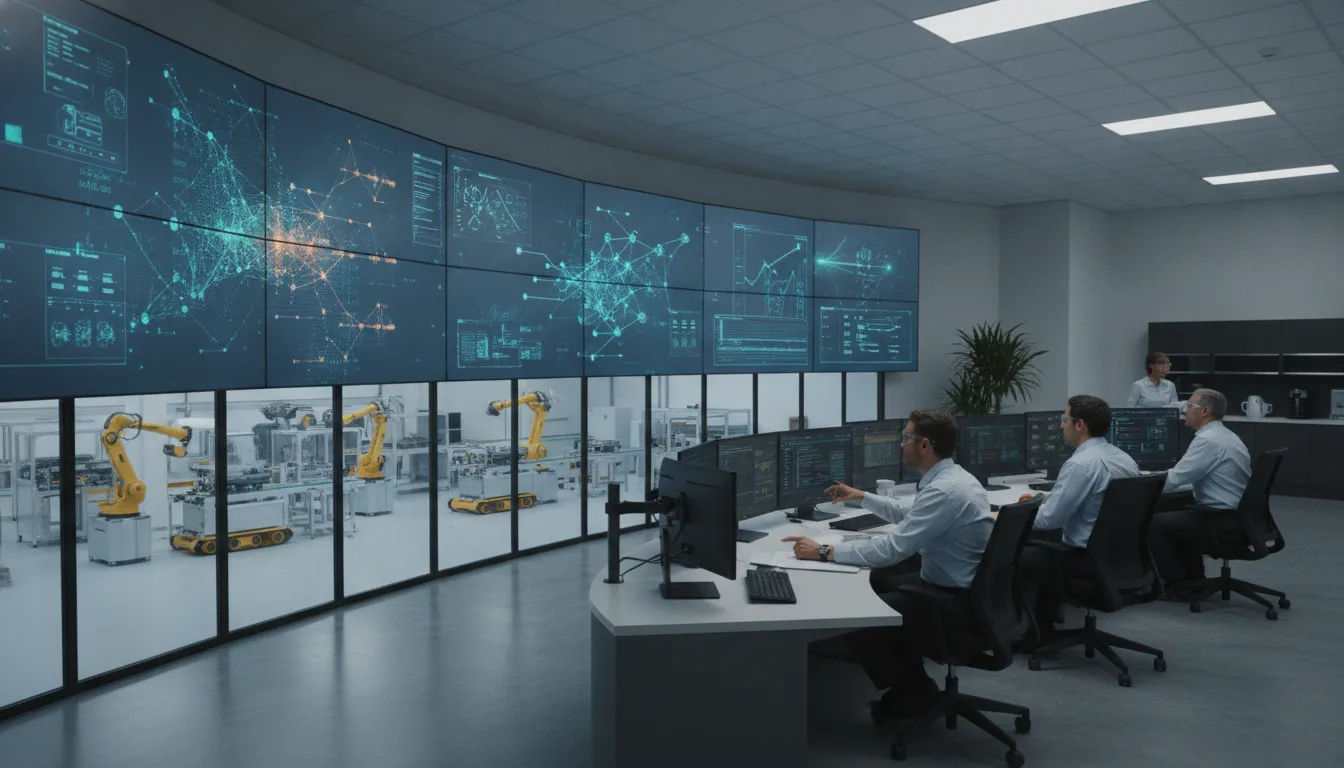
Detection and response across both environments
Monitoring must connect enterprise signals with industrial context. An unusual login, new connection, or configuration change becomes more meaningful when analysts understand the affected production process and expected behavior. Managed Detection and Response (MDR) can extend monitoring and investigation capability, but escalation procedures must include people who understand plant safety and operations.
At minimum, a layered control program should cover:
- Strong authentication and privileged access governance.
- Secure, time-bound, and monitored remote access.
- Network segmentation and controlled administrative pathways.
- Risk-based vulnerability and configuration management.
- Centralized logging, detection engineering, and response escalation.
- Offline or otherwise protected backups with tested restoration procedures.
These measures align with widely used cybersecurity for manufacturing best practices, but implementation quality matters more than checklist completion. Controls should be tested against realistic scenarios and reviewed whenever the plant, production process, or threat exposure changes.
How to prepare for incidents without creating safety risk
Manufacturing incident response must contain cyber threats without causing unsafe equipment states or avoidable production damage. Plans should define decision authority, safe isolation methods, manual operating options, evidence requirements, communications, and recovery priorities. Regular exercises expose gaps before an actual event forces teams to make high-consequence decisions under pressure.
A conventional IT response playbook may call for immediately disconnecting affected systems. In a plant, that action could interrupt a controlled process, damage equipment, compromise product quality, or create a safety hazard. Response plans must therefore distinguish between cyber containment and safe process control. Plant engineering and safety leaders need defined roles in high-impact decisions.
Scenario-based playbooks should address ransomware, compromised remote access, unauthorized controller changes, loss of visibility, identity compromise, and disruption of shared services. Each playbook should identify the signals that trigger escalation, the people authorized to act, the systems that must remain available, and the sequence for restoring operations.
Build recovery around production dependencies
Recovery plans must cover more than file restoration. Manufacturers may need golden configurations, controller logic, recipes, historian data, engineering workstation images, software installers, license information, and vendor support contacts. Backups should be protected from the production environment and restored in tests that verify both technical integrity and safe process operation.
Use exercises to answer practical questions:
- Can the team identify the affected production zones and dependencies quickly?
- Who can authorize isolation, shutdown, failover, and restart decisions?
- Can critical systems operate safely in a degraded or manual mode?
- Are clean configurations and backups available, protected, and usable?
- How will leaders communicate with employees, customers, regulators, and partners?
- What evidence must be preserved for investigation and lessons learned?
CISA's #StopRansomware Guide recommends preparation, prevention, detection, and response practices that organizations can adapt to their environment. The manufacturing version of that work must be exercised with production stakeholders rather than owned solely by the security team.
How CIOs and CISOs should measure manufacturing resilience
Leaders should measure whether controls reduce material risk and improve the organization's ability to maintain or restore safe production. Useful metrics cover asset visibility, access governance, segmentation, detection, response, recovery, exceptions, and exercise performance. Metrics should expose decision gaps and trends, not create a false impression of certainty.
Board reporting should connect cybersecurity investment to operational outcomes. Counts of alerts, vulnerabilities, or tools rarely explain whether a plant can withstand a credible incident. A better scorecard shows the coverage and effectiveness of controls around the systems that matter most, along with known exceptions and funded remediation plans.
Useful measures include:
- Percentage of critical assets with confirmed owners, dependencies, and recovery requirements.
- Percentage of remote and privileged access paths governed by approved controls.
- Coverage of monitored traffic at critical zone boundaries.
- Age and business impact of unresolved high-risk exceptions.
- Time to detect, escalate, contain, and safely recover during exercises.
- Percentage of critical configurations and backups restored successfully in tests.
The NIST Cybersecurity Framework can help leaders organize outcomes and communicate current and target states. It should be used as a decision framework, not treated as proof that every control is effective. Evidence from architecture reviews, control testing, exercises, and recovery tests provides the confidence executives need.
For organizations that need specialized capacity or independent validation, managed IT services for manufacturing can augment internal teams with architecture, monitoring, governance, and operational support. The right partner should work transparently with plant personnel and measure success in risk reduction, reliability, and recoverability.
Frequently Asked Questions
What is cybersecurity for manufacturing?
Cybersecurity for manufacturing is the coordinated protection of enterprise IT, operational technology, industrial control systems, data, and connected production processes. It combines governance, architecture, access controls, monitoring, incident response, and recovery practices while accounting for the safety, uptime, quality, and reliability requirements of a plant.
Why can OT systems not be secured exactly like IT systems?
OT systems interact with physical processes and often have long lifecycles, limited maintenance windows, and strict safety or availability requirements. Controls that are routine in IT, such as active scanning, rapid patching, or immediate isolation, may disrupt production. OT security therefore requires operational context, careful testing, and compensating controls.
What should a manufacturer secure first?
Start by identifying critical production assets, dependencies, access paths, and realistic consequences. Then address high-risk exposures such as unmanaged remote access, weak privileged access, unnecessary connectivity, absent segmentation, and untested recovery. Priorities should reflect business and safety impact rather than vulnerability severity alone.
How often should an IT and OT incident response plan be tested?
Test the plan on a risk-based schedule and whenever major systems, processes, vendors, or responsibilities change. Many organizations conduct focused exercises throughout the year and a broader cross-functional exercise annually. The essential requirement is to resolve findings and verify that containment and recovery actions remain safe and workable.
Build a resilient IT and OT security program
A resilient program begins with an evidence-based view of assets, attack paths, operational consequences, and recovery capability. From that foundation, leaders can prioritize architecture and controls that protect safe production. Independent assessment helps validate assumptions, expose blind spots, and establish a practical roadmap aligned with business risk.
Manufacturing leaders do not need to choose between security and uptime. They need a program designed around both. BCS365 works with complex organizations to assess risk, strengthen architecture, improve detection and response, and build measurable resilience while collaborating with internal IT and operational stakeholders.
Contact BCS365 to discuss a practical roadmap for securing your connected manufacturing environment.