
For CIOs, CISOs, and VPs of IT at regulated organizations with 300 to 3,000 employees, co-managed it services provide a structured way to expand operational depth without surrendering control of the technology roadmap. The model combines an internal team's business context and authority with an external partner's specialized engineering, security operations, and service-management capacity. It is particularly valuable when infrastructure complexity, compliance obligations, or growth has outpaced the capacity available inside the organization.
Schedule a discovery session to identify the highest-value gaps in your IT operating model.
Co-managed IT services are a shared operating model in which an external provider augments, rather than replaces, an internal IT team. Responsibilities, tools, decision rights, and performance measures are defined jointly. The organization retains strategic control while gaining specialist capacity for areas such as infrastructure operations, cloud engineering, compliance, and 24/7 security monitoring.
The best co-managed relationships are not generic outsourcing arrangements. They are designed around specific risks, constraints, and desired business outcomes. An effective partner should integrate with existing processes, document accountability, and give internal leaders greater visibility into performance. The result is an IT function with more resilience, deeper expertise, and the capacity to execute strategic work while maintaining reliable daily operations.
What are co-managed IT services?
Co-managed IT services are a hybrid operating model between a fully internal IT department and a fully outsourced managed service. The internal team remains responsible for technology strategy, business alignment, and the functions it is best positioned to own. The external provider assumes defined responsibilities or works alongside internal specialists in shared areas. That division can change as priorities, risks, and internal capabilities evolve.
The model is well suited to established mid-market organizations that already have capable technology leaders and engineers. These organizations rarely need a provider to take over every function. They need targeted depth: an experienced escalation path, mature tooling, disciplined operations, or specialists in security, cloud, infrastructure, and compliance. Co-management supplies that depth while preserving institutional knowledge and internal decision-making authority.
A hybrid model built around control
When evaluating co-managed IT vs fully managed IT, the most important distinction is governance. In a fully managed arrangement, the provider generally owns most operational responsibilities. In a co-managed arrangement, internal leaders retain the roadmap and choose which capabilities to keep, share, or delegate. The provider functions as a force multiplier, not a substitute for leadership.
This structure also differs from staff augmentation. Adding contractors may increase headcount for a project, but it does not necessarily provide an operating system, integrated tools, documented controls, or access to a multidisciplinary team. A co-managed provider should bring repeatable processes and accountable service delivery in addition to individual expertise.
| Feature | Co-Managed IT | Fully Managed IT | Staff Augmentation |
|---|---|---|---|
| Internal Team | Remains in place and leads strategy | Provider owns most operations | Remains in place |
| Primary Goal | Expand capability and resilience | Delegate broad operational ownership | Add temporary capacity |
| Tool Ownership | Shared or retained by the organization | Typically provider-led | Typically retained by the organization |
| Decision Authority | Internal CIO, CISO, or IT director | Defined primarily through the provider contract | Internal leadership |
| Capability Gaps | Addresses specific operational or specialist gaps | Covers most IT functions | Adds individual contributors |
Shared responsibilities, systems, and evidence
A credible co-managed model makes responsibility explicit. Both teams should understand who owns a service, who approves changes, who responds to incidents, and who must be consulted. Shared ticketing, monitoring, documentation, and reporting create a consistent operational view. Without that integration, co-management can deteriorate into two teams working in parallel, with duplicated effort and ambiguous accountability.
Organizations can divide responsibilities in many ways. An internal team may retain endpoint support and application ownership while the provider manages cloud infrastructure, patch orchestration, backup operations, and security monitoring. Another organization may retain infrastructure engineering but use the provider for service desk coverage, escalation, and compliance evidence. The right design follows risk, internal capability, and business priorities, not a generic service bundle.
Core benefits of the model
Co-management allows an organization to access capabilities that would be expensive, slow, or impractical to build independently. It can also reduce concentration risk by establishing documented processes and access to a broader engineering team. For internal leaders, the strategic value is not simply more hands. It is a more capable operating model with clearer controls and fewer single points of failure.
- Specialist capacity: Add cloud, security, network, compliance, or infrastructure expertise when it is needed.
- Operational resilience: Establish coverage, escalation paths, and documented procedures beyond the availability of individual employees.
- Strategic focus: Protect internal capacity for architecture, modernization, business enablement, and governance.
- Scalable execution: Increase support for acquisitions, migrations, new locations, or major projects without relying only on permanent hiring.
- Measurable accountability: Use service levels, operational metrics, and regular reviews to connect activity with outcomes.
Key takeaway: co-managed IT is most effective when it increases internal authority and execution capacity at the same time.
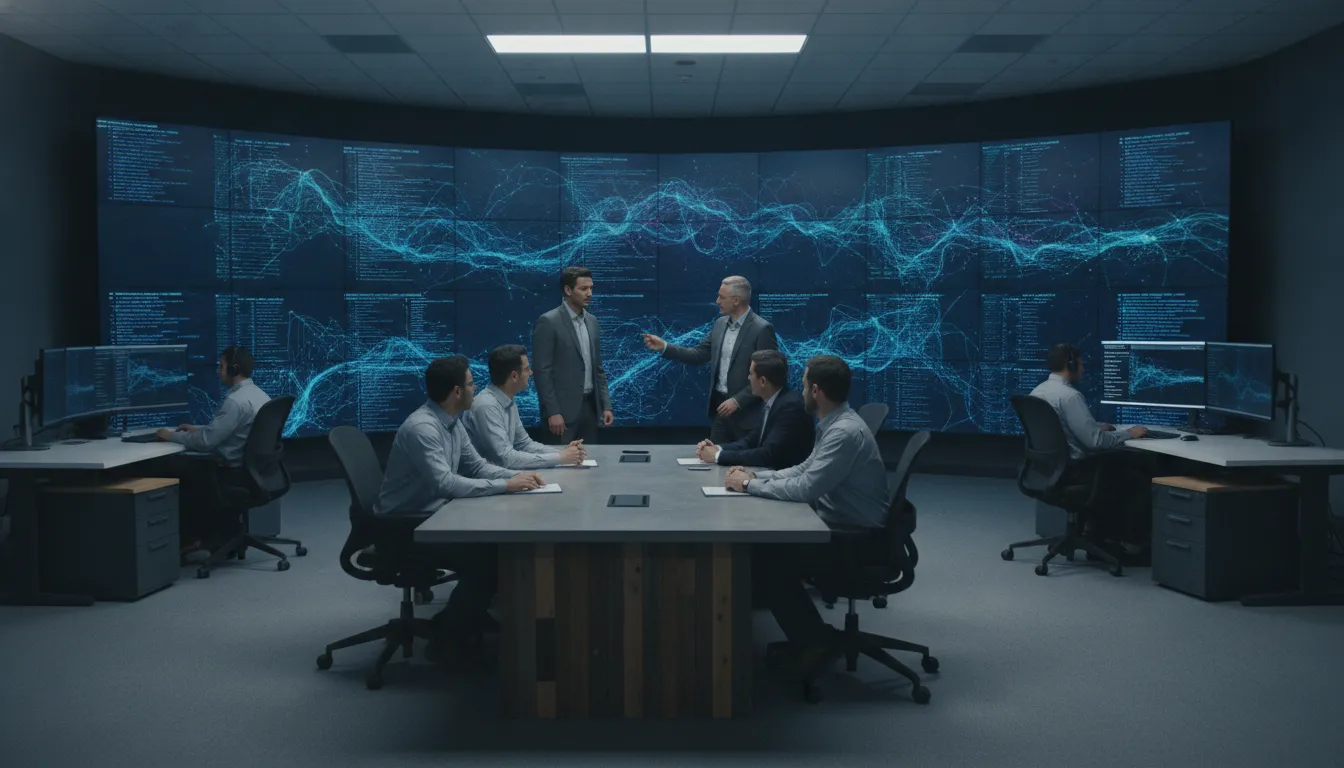
When does an internal IT team need a force multiplier?
An internal team usually needs a force multiplier when demand consistently exceeds its capacity or when important capabilities depend on too few people. The warning signs are not limited to a large ticket queue. They can appear as delayed modernization, postponed risk remediation, incomplete documentation, weak after-hours coverage, or critical projects that repeatedly lose resources to operational incidents.
Leaders should evaluate whether the current operating model can support the organization's next phase, not only whether it can keep today's systems running. A regulated business may be meeting daily service expectations while accumulating material risk in identity management, recovery testing, vulnerability remediation, or audit evidence. Co-management creates an opportunity to address those gaps systematically without disrupting the internal team's strengths.
Operational demand is displacing strategic work
A persistent imbalance between maintenance and transformation is a strong signal. If architects and senior engineers routinely spend their time resolving recurring operational issues, strategic initiatives will slow and technical debt will grow. The concern is not that operational work lacks value. The concern is that high-cost expertise is being consumed by work that could be standardized, automated, or assigned to a partner with the right process and coverage.
Useful indicators include repeated project delays, rising incident recurrence, inconsistent patch performance, limited documentation, and an escalation queue that depends on a few senior employees. These patterns call for an operating-model review. A provider can assume selected workflows, build operational discipline, and create room for internal staff to lead architecture and business-facing initiatives.
Gaps in 24/7 security coverage
Security events and infrastructure failures can occur at any time, while many internal teams are designed primarily for business-hours operations. Coverage must account for alert triage, escalation, containment authority, and communication, not simply monitoring. Managed Detection and Response (MDR) can provide continuous analysis and response capability when it is integrated with the organization's incident-response process and decision rights.
A security coverage assessment should examine where a threat or control failure could remain undetected, unassigned, or unresolved. Common gaps include:
- Alert triage: No defined team continuously validates and prioritizes alerts from endpoint, identity, cloud, and network controls.
- Response authority: Analysts lack documented permission to isolate systems, disable accounts, or escalate critical events.
- Telemetry coverage: Important systems are not integrated into monitoring, or retention does not support investigation and audit needs.
- Vulnerability remediation: Findings are identified but lack owners, deadlines, and risk-based exception processes.
- Recovery coordination: Backup, restoration, incident response, and business continuity plans are not tested together.
Regulatory and contractual obligations add another layer of complexity. Internal teams must maintain controls, produce evidence, manage exceptions, and demonstrate that responsibilities are operating as designed. An experienced partner can support those processes with documented workflows and specialist knowledge. The organization still owns risk decisions, but it gains the capacity to execute and evidence them consistently.
Key-person risk and project scale
Complex technology estates cannot safely depend on one person's undocumented knowledge. Concentration risk becomes especially serious when a single engineer owns privileged access, network architecture, recovery procedures, or a critical business platform. Co-management can reduce that exposure by creating shared documentation, cross-functional escalation paths, and tested operational procedures.
Large initiatives can create a separate capacity challenge. Cloud migrations, acquisitions, office expansions, platform changes, and security programs require sustained specialist attention. Asking the same internal team to deliver those projects while maintaining service levels often creates avoidable tradeoffs. A co-managed partner can add project capacity and domain expertise while internal leaders retain architecture standards, business context, and approval authority.
Section summary: consider co-management when capacity constraints are persistent, risk is concentrated, or strategic execution is repeatedly displaced by operations.
How should responsibilities be divided?
A successful partnership begins with a deliberate allocation of responsibility. The objective is not to transfer the largest possible volume of work. It is to place each function with the team best equipped to execute it, while keeping accountability visible. Leaders should assess business context, required coverage, existing expertise, control ownership, and the consequences of failure before determining the split.
Daily operations
Many organizations retain user-facing support internally because their team understands the business, applications, and stakeholders. A provider may then operate selected back-end functions such as infrastructure monitoring, patch management, backup administration, or escalation support. Other organizations reverse that model, using the provider for frontline support while internal specialists own applications and architecture.
Whichever design is chosen, the workflow should be integrated. Tickets need consistent categorization and priority rules. Escalations need response targets and named owners. Changes need approval paths and evidence. The teams should share an operational calendar for maintenance, releases, business events, and audit deadlines. Shared visibility is essential; otherwise, handoffs become a source of delay and risk.
Security and compliance
Security responsibilities require particularly precise boundaries. A provider may deliver MDR, vulnerability-management support, security engineering, or compliance evidence collection. Internal leadership should retain risk acceptance, policy authority, and business-level incident decisions. Technical response actions should be pre-authorized where appropriate so that critical events do not wait for an improvised approval process.
Compliance should be treated as an operating discipline rather than a periodic audit exercise. The partner can help map technical controls, collect evidence, track remediation, and identify control drift. Internal owners remain accountable for the organization's obligations and determine how controls align with business risk. This division combines execution support with appropriate governance.
Project and vendor management
The internal team should remain closely involved in vendor selection, architecture decisions, and roadmap prioritization because it understands business strategy and organizational constraints. A co-managed provider can strengthen due diligence, implementation planning, integration, and ongoing technical management. The provider should also help the organization preserve portability by maintaining documentation, configuration records, and clear ownership of accounts and data.
A responsibility matrix should specify who is responsible, accountable, consulted, and informed for each material service. It should cover routine operations, major changes, security incidents, recovery, compliance activities, vendor escalations, and executive communications. That matrix is not a one-time onboarding artifact. It should be reviewed whenever the technology estate, risk profile, or service scope changes.
What outcomes should co-managed IT services deliver?
Co-managed IT services should be evaluated by outcomes rather than activity volume. A large number of closed tickets does not necessarily indicate a healthier technology environment. Executive stakeholders need to know whether services are more resilient, risks are being reduced, projects are moving faster, and technology is supporting business objectives more effectively.
Greater strategic capacity
The model should create protected capacity for internal leaders and specialists to focus on architecture, modernization, governance, and business initiatives. That does not mean separating strategy from operations. It means assigning repeatable operational responsibilities in a way that allows internal expertise to be applied where business context and decision authority matter most.
Good measures include the percentage of strategic milestones delivered, reduction in recurring incidents, time spent on planned versus unplanned work, and progress against technical-debt or risk-remediation plans. These measures show whether the partnership is improving the operating model instead of simply absorbing demand.
Stronger resilience and faster response
Resilience requires reliable detection, escalation, recovery, and learning. A partner should help reduce time to identify and resolve material incidents, strengthen change discipline, test recovery procedures, and address root causes. Security operations should connect MDR telemetry and response with the organization's broader incident-management and business-continuity processes.
Executive reporting should distinguish between service availability, security exposure, and recovery readiness. These are related but not interchangeable. An environment can appear available while carrying unaddressed vulnerabilities or untested recovery assumptions. A mature co-managed model makes these risks visible and assigns actions to named owners.
Predictable capacity and investment
Co-management can make resource planning more predictable by defining a stable service scope and providing access to specialist capacity without requiring a separate hire for every capability. However, predictability depends on a transparent commercial model. Leaders should understand what is included, what triggers project fees, how consumption is measured, and how scope changes are approved.
The relevant business case should compare the cost and risk of the current model with the expected value of the partnership. Consider hiring time, coverage limitations, project delays, control gaps, and concentration risk, not only the provider fee. The goal is an informed investment decision that supports resilience and execution.
- Operational outcome: Fewer recurring incidents, clearer ownership, and more consistent service performance.
- Security outcome: Better coverage, faster qualified response, and visible remediation accountability.
- Strategic outcome: More internal capacity for roadmap priorities and business-aligned initiatives.
- Governance outcome: Reliable reporting, documented controls, and auditable decisions.
- Workforce outcome: Better use of internal expertise and reduced dependence on individual employees.

How to build an effective co-managed partnership
Building an effective partnership starts with a clear view of current capabilities, risks, and priorities. Leaders should identify where the internal team creates differentiated value, where execution is constrained, and where risk exceeds the organization's tolerance. This assessment becomes the basis for scope, responsibilities, and measurable outcomes.
Define shared goals and baseline performance
Goals should be specific enough to guide operating decisions. Examples include improving after-hours response, completing priority remediation, strengthening recovery readiness, or accelerating a modernization program. Each goal needs an agreed baseline, owner, target, and review cadence. Without that structure, the relationship may default to ticket handling instead of delivering strategic value.
Both parties should also identify dependencies and assumptions. If a provider is accountable for patch performance, for example, the organization may still need to approve maintenance windows, resolve application conflicts, or accept exceptions. Documenting these dependencies prevents incomplete accountability and helps executives understand the decisions required from their teams.
Operating steps for success
- Assess the current operating model, capability gaps, control requirements, and business priorities.
- Define service scope and a responsibility matrix for routine work, changes, incidents, and recovery.
- Agree on decision rights, escalation paths, privileged-access controls, and communication protocols.
- Integrate ticketing, monitoring, documentation, and reporting to create a shared operational view.
- Establish baseline measures, outcome targets, service levels, and risk-remediation priorities.
- Conduct regular operational and executive reviews, then adjust scope as the organization changes.
Trust, transparency, and continuous improvement
Trust is built through evidence and consistent execution. The provider should report service issues, control gaps, and missed targets directly, along with corrective actions. Internal leaders should provide the context, access, and decisions required for the provider to perform. Both sides should be willing to challenge assumptions and refine the operating model.
A credible provider should be transparent about its methods, staffing, escalation model, and limitations. It should support the organization's ownership of its technology estate rather than creating unnecessary dependency. When evaluating partners, use a structured process and review the guidance in choosing an IT service provider.
Governance keeps shared operations accountable
Governance converts a service relationship into an accountable operating model. It defines who can make decisions, how performance is assessed, how risk is escalated, and how evidence is maintained. This is especially important in life sciences, finance, manufacturing, insurance, and other regulated or operationally sensitive environments.
Governance controls to establish
A governance framework should cover strategic, operational, security, and commercial decisions. At minimum, it should include:
- Decision rights: Named authority for strategy, architecture, risk acceptance, changes, and incident response.
- Identity and access: Least-privilege access, approval workflows, periodic reviews, and auditable privileged activity.
- Performance management: Service levels, outcome metrics, trends, exceptions, and corrective-action ownership.
- Change control: Risk assessment, testing, approval, implementation evidence, and rollback planning.
- Risk and compliance: Control mapping, evidence collection, remediation tracking, and exception management.
- Continuity and exit planning: Documentation, data ownership, recovery testing, and a workable transition process.
Key takeaway: governance should preserve internal control while giving the provider enough authority and access to meet its responsibilities.
Control identity, access, and change
Shared operations require disciplined access management. Provider personnel should receive only the access required for their roles, through named accounts and approved workflows. Privileged actions should be logged and reviewed. Access should be removed promptly when roles or staffing change. These controls protect the organization while allowing the provider to act efficiently.
Change management deserves equal attention. Both teams need a common process for assessing risk, scheduling work, approving implementation, documenting results, and responding to failure. Emergency changes should have defined authority and retrospective review. This creates accountability without imposing unnecessary friction on routine work.
Maintain audit and recovery readiness
Audit readiness depends on evidence that controls operate consistently. A partner can support logs, change records, access reviews, remediation tracking, and technical evidence. Internal owners should confirm that the evidence meets organizational and regulatory requirements. Periodic review reduces the risk of discovering missing records or ineffective controls during an audit.
Recovery readiness requires more than successful backup jobs. The organization should define recovery objectives, validate that critical systems and dependencies are covered, and test restoration and communication procedures. Co-managed exercises allow both teams to practice their roles and improve the plan before a real disruption.
Incident response and Managed Detection and Response (MDR)
Managed Detection and Response (MDR) should operate as part of a shared incident-response model. The provider needs visibility into relevant telemetry, clear severity criteria, documented contacts, and pre-agreed response authority. The internal team needs timely context to make business decisions and coordinate legal, compliance, communications, and operational stakeholders.
Tabletop exercises and technical simulations help validate the relationship. They reveal gaps in access, communication, authority, and recovery that documentation alone may not expose. Lessons should become tracked improvements with owners and deadlines. The objective is not merely to detect events; it is to respond decisively, limit impact, and improve resilience.
Discuss a co-managed operating model aligned with your risk, compliance, and growth priorities.
Frequently Asked Questions
What is the difference between co-managed IT and standard managed IT services?
Standard managed IT services generally place broad operational responsibility with the provider. In a co-managed model, the provider works alongside an existing internal team under a defined division of responsibilities. Internal leaders retain strategic control, while the provider adds specialist expertise, coverage, tooling, and accountable execution in selected areas.
When should a business consider a co-managed IT services model?
A business should consider co-management when its internal team is capable but constrained by persistent operational demand, specialist skill gaps, limited after-hours coverage, key-person risk, or major projects. It is also appropriate when compliance and security responsibilities require more mature processes and evidence without transferring the entire IT function.
How do co-managed IT services work?
The organization and provider assess priorities, define scope, allocate responsibilities, integrate operational tools, and agree on decision rights and measures. The provider then performs selected services or collaborates with internal staff. Regular operational and executive reviews track performance, risk, and changing needs while the internal team retains ownership of the technology roadmap.
What are the key benefits of co-managed IT services?
Key benefits include access to specialist expertise, stronger operational and security coverage, reduced key-person risk, more predictable capacity, and greater internal focus on strategic initiatives. The model can also improve governance through documented responsibilities, integrated reporting, measurable outcomes, and clearer accountability for service performance and risk remediation.
Build a stronger IT operating model
Co-management is not a shortcut around leadership or governance. It is a way to extend both. The right partner brings specialist depth, disciplined execution, and transparent accountability while enabling internal leaders to retain control of strategy and business priorities. For regulated mid-market organizations, that combination can strengthen resilience and create the capacity required for modernization and growth.
Start by identifying the work that most constrains your team and the risks that current coverage cannot adequately address. Then define the outcomes, responsibilities, and controls a partner must support. This approach creates a co-managed relationship grounded in evidence and aligned with the organization's long-term operating model.
Ready to evaluate the right partnership structure? Schedule a discovery session with BCS365.